Introduction: The Fake Group and Easy Money Scam
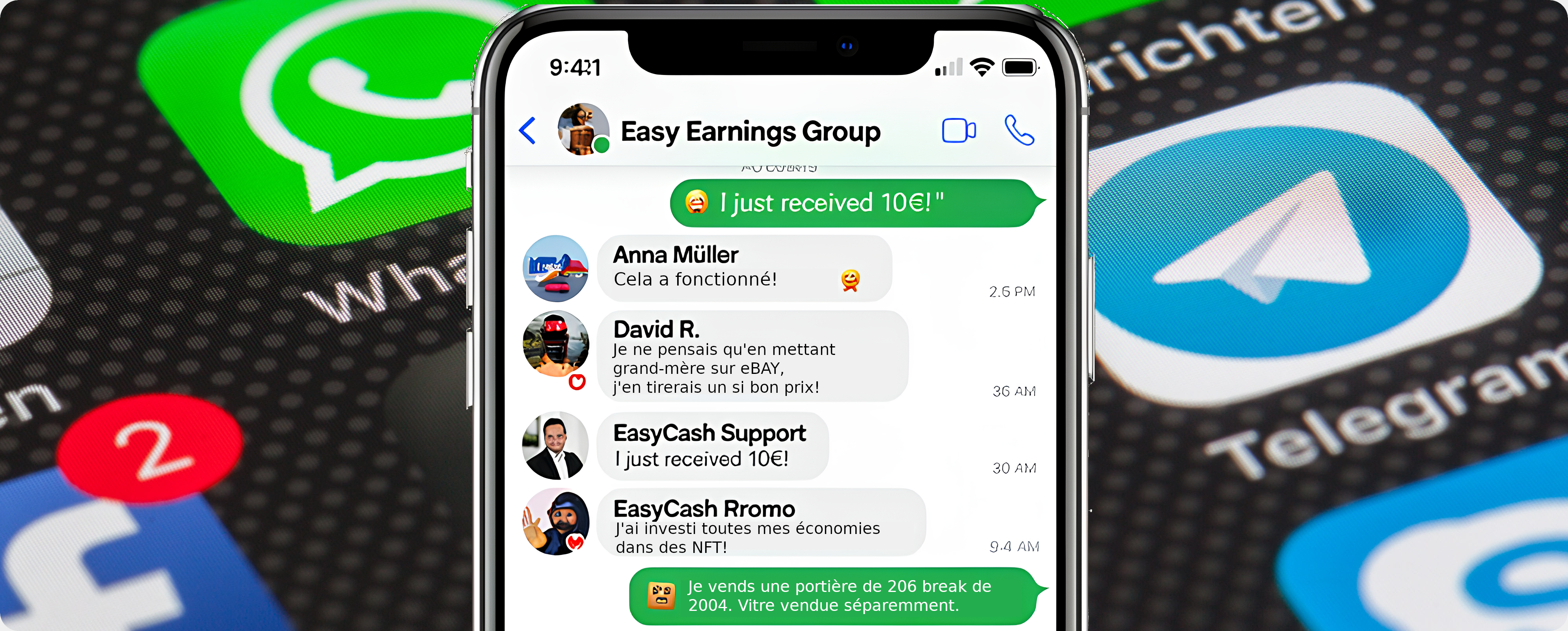
Imagine: You’re added to a WhatsApp or Messenger chat group without ever requesting it. Around you, strangers exchange enthusiastic messages. Some introduce themselves as regular users, others as 'witnesses' who have already received money. The scenario is always the same: just like a page, share a link, or sign up for an offer to receive €10, €20, or even more. Carefully orchestrated fake profiles claim to have received their payouts. The promise is tempting, especially during economic hardship. Yet behind these seemingly harmless exchanges lies a scam that has become increasingly common in 2026.
Fraudsters exploit the trust placed in social networks and messaging apps, where over 80% of financial losses from online scams are now recorded. Facebook, WhatsApp, and Telegram are the most targeted platforms, with ever more sophisticated techniques: fake profiles, fabricated testimonials, and even deepfakes to lend credibility to their lies. Their goal? To steal your banking details, trick you into paying registration fees, or involve you in fraudulent investments. Victims, often trapped by urgency and the promise of quick gains, realize too late that they’ve been manipulated.
How to Fight Back Against These Scams?
The first line of defense is your app settings. Here are the key steps to protect yourself:
- Lock down your privacy settings: On WhatsApp, go to Settings > Account > Privacy and restrict group additions to your contacts only. On Facebook and Messenger, disable the option that allows strangers to add you to groups or send you messages.
- Beware of offers that seem too good to be true: A legitimate company will never ask for money to recruit you or validate a prize. Promises of easy money, unexpected contests, or urgent messages should immediately raise suspicion.
- Never share your codes or banking information: Scammers use various pretexts (contests, winnings, banking issues) to extract verification codes or banking details from you. No legitimate institution will ever ask for this type of information via message.
- Report and block suspicious accounts: Platforms have tools to report fraudulent behavior. Use them systematically.
- Educate those around you: Scammers often target people who are less familiar with digital technology. Share these tips with your loved ones, especially the most vulnerable.
Vigilance: Your Best Weapon Against Fraud
Chat group scams exploit our trust and desire for quick gains. In 2026, their sophistication continues to grow, but the means to protect yourself remain accessible to everyone. By adopting simple habits and staying informed, you reduce the risk of falling into the trap. The golden rule? If an offer seems too good to be true, it probably is.
As for Fraudulent Calls and SMS
To further protect your privacy, LLort is the app you need. Unlike traditional solutions, LLort doesn’t just send unwanted calls to voicemail—it automatically hangs up before your phone even rings, preventing missed call notifications or residual voicemails. With LLort, say goodbye to nuisance calls and spam SMS:
- Smart filtering: Suspicious numbers are identified and blocked before your phone even vibrates.
- Automatic STOP Ads: Spam messages are silently filtered, and a 'STOP' response is sent to unsubscribe you permanently.
- Discreet notifications: Dubious SMS (fake delivery scams, fake bank SMS, etc.) are intercepted, with a discreet warning if in doubt.
- Full compatibility: LLort replaces your default phone app without affecting your native SMS app. You stay in control, with no compromises.
Discover how LLort can protect you every day: www.llort.tel.
Reporting Scams: Official Resources
If you are a victim of or witness a scam attempt, report it to the relevant authorities:
- SignalConso (DGCCRF) for consumer scams.
- CNIL for breaches of personal data protection.
- Pharos (Platform for harmonization, analysis, cross-referencing, and routing of reports) for illegal online content or behavior.
Together, let’s make online scams a thing of the past!